AI Unhinged
How AI Startups Stand Out by Embracing Weirdness
– Jan Thede
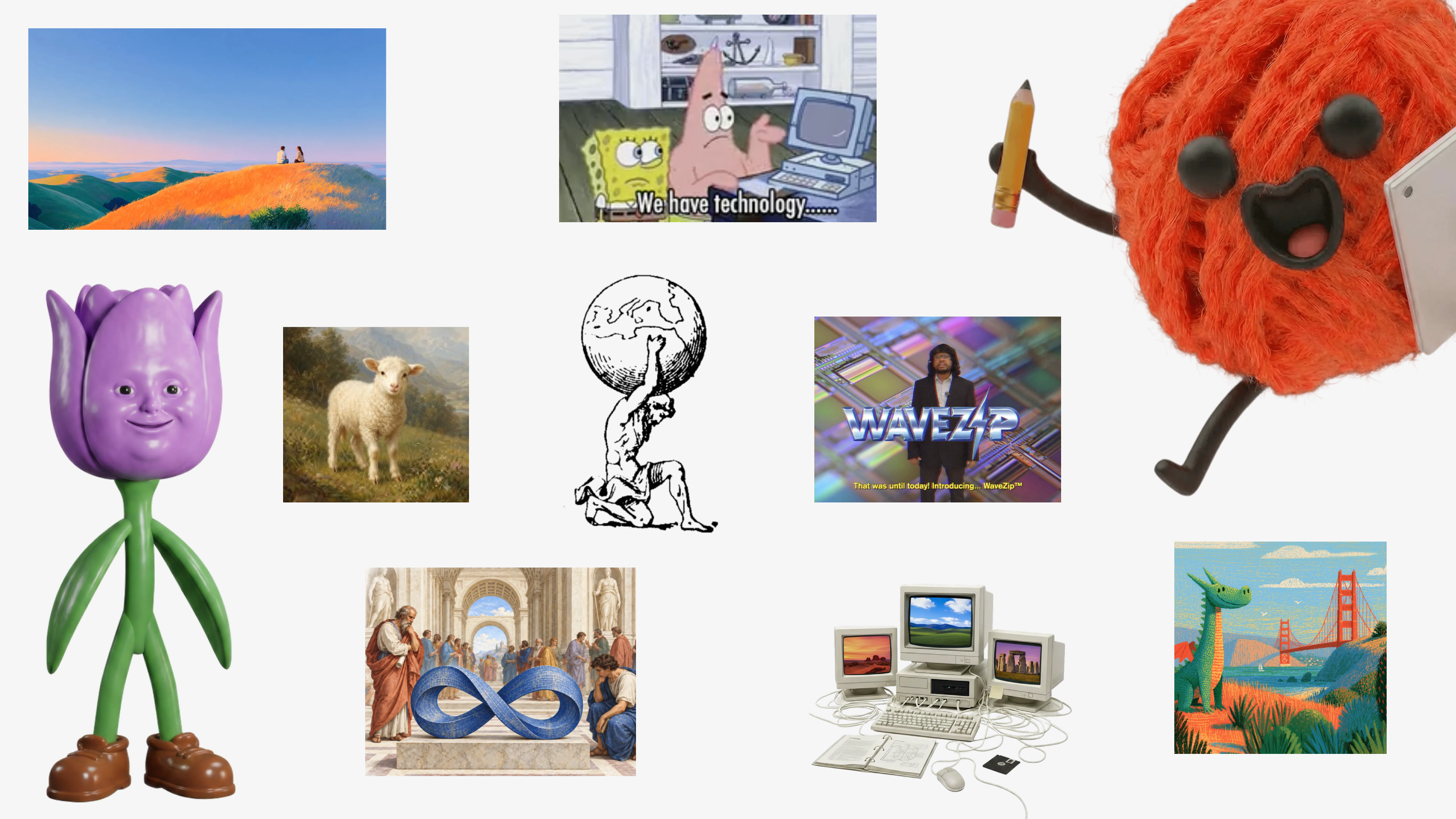
Earlier this year, we took a deep dive into the visual identities of AI heavyweights like Anthropic, Cohere, and OpenAI.
This time, it’s all about early-stage AI companies. For them, branding is all about standing out from the crowd.
Forget traditional branding rules, consistency, or timelessness. Be expressive, weird, and different to make investors, customers, and potential hires stop scrolling.
We screened hundreds of AI startup brands. Here are the ones that made us stop scrolling and the design trends they’re leaning into.
Download the report
AI Unhinged
PDF, 5.6 MB

Shades of Unhinged
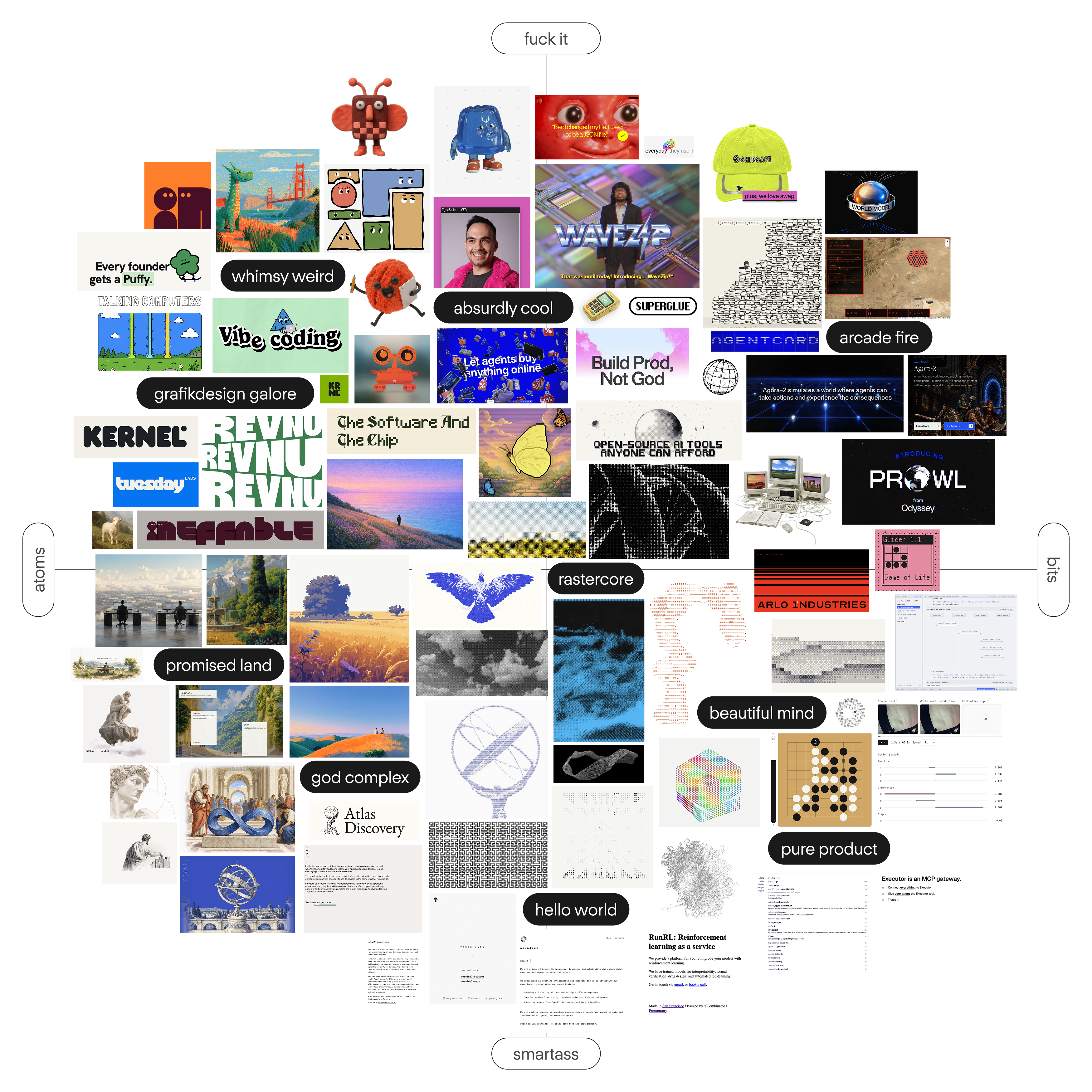
We found ten trends and squeezed them onto a map.
The horizontal axis runs from atoms to bits. Some brands lean into the physical world, while others live in the digital sphere.
The vertical axis is about the kind of weirdness. Some lean into highbrow know-it-all vibes, while others go full-on weird.
Whimsy Weird
Playing with cute mascots to humanize a technology that feels threatening to some is not new for AI brands. OpenAI, Mistral, and Notion have done it before. And Meta just broke the internet with Muse.
What feels new here is the level of unhinged cuteness in B2B.
Media
Grafikdesign Galore
Some AI brands are going all-in on graphic design: bold 60s/70s-inspired colours, custom lettering, and chunky wordmarks.
Pared-back, playful and punchy all at once.
Media
Absurdly Cool
Hundreds of AI startups have been founded this year alone. To stand out from the crowd, some brands go completely unhinged. Silly Y2K visuals, hilarious memes, ridiculous merch.
The more absurd, the better.
Media
Arcade Fire
Some startups go all-in on arcade-game aesthetics: low-poly worlds, 8-bit graphics, monospace type, synthwave grids.
Definitely a way to stand out in sectors like HR tech, enterprise IT, and defense. Bonus: a nostalgia hit for anyone who grew up playing arcade games.
Media
Rastercore
AI brands seem to love all kinds of raster-based image treatments: pixelation, dithering, ASCII art, duotone, you name it. Sometimes giving off early-computer-art vibes, sometimes leaning into analogue printing techniques.
Always kind of retro and an easy trick to make generic motifs look unique.
Media
Pure Product
Most startup brands work like this: You build something and then design a website to show it off.
Some just skip the sugarcoating and send a strong signal: What we build doesn’t need a brand to shine.
Media
Beautiful Mind
Mathematical art in all its forms: geometric shapes, network visualizations, cellular automata.
Sometimes tied to the product, sometimes just there to make the brand look smart and look good at the same time.
Media
Hello World
Who needs a fancy website? Pre-product startups as well as hyped 10-billion-dollar companies stand out with less, not more. Some lean more into a manifesto vibe, others into ’90s HTML.
All of them seem to agree that more than a single page is so 2025.
Media
God Complex
Classical mythology is all over AI branding right now. It gives brands an air of intellectual swagger and visionary ambition. Anything Atlas-related gets bonus points for the nod to Ayn Rand.
But we think this trend definitely peaked after too many brands that just slapped AI imagery of random ancient Greek or Roman motifs on their websites.
Media
Promised Land
Dreamy landscapes as an analogy for the wonderful future where manual work in supply chain operations is finally cut by 95% and chips can burn through 20K tokens per second. Oh, utopia!
Sometimes retro 8-bit, sometimes hyperrealistic, sometimes impressionistic. Always hyper-cheesy.
Media
Download the report
AI Unhinged
PDF, 5.6 MB
By now, some of the startups mentioned here have probably already been acquired or shut down.
Maybe their branding had something to do with it.